
Space Innovation gaps
In the 21st century, space exploration has transcended governmental boundaries, with private enterprises taking the helm. This shift underscores the pivotal role of STEAM (Science, Technology, Engineering, Arts, and Mathematics) education in fueling innovation and driving the space industry forward.
🌍 Global Titans of Private Space Research
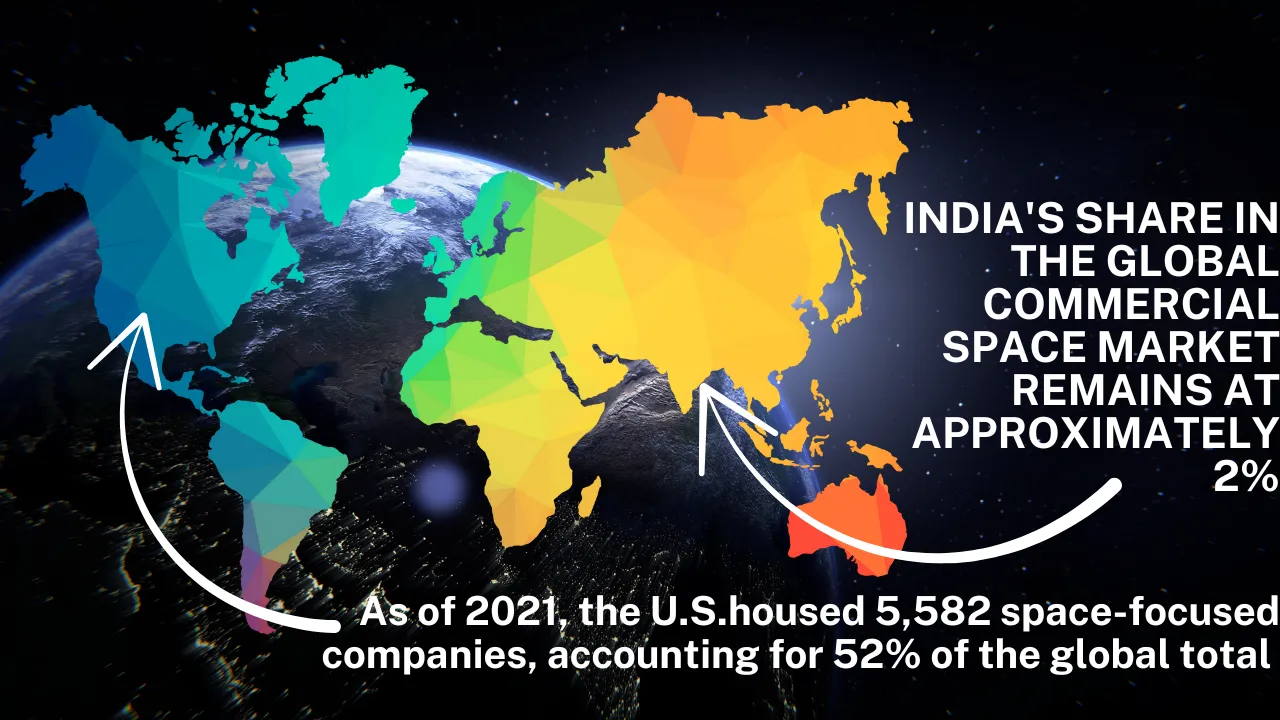
The global private space sector has witnessed exponential growth, with the United States leading the charge. As of 2021, the U.S. housed 5,582 space-focused companies, accounting for 52% of the global total . These companies have been instrumental in advancing technologies ranging from reusable rockets to satellite internet services.
Here's an overview of prominent private space companies worldwide:
| Country | Company | Founder(s) | Founded | Key Focus Areas |
|---|---|---|---|---|
| USA | SpaceX | Elon Musk | 2002 | Reusable rockets, Mars colonization, satellite internet |
| USA | Blue Origin | Jeff Bezos | 2000 | Suborbital tourism, lunar landers, heavy-lift rockets |
| USA | Relativity Space | Tim Ellis, Jordan Noone | 2015 | 3D-printed rockets, automation, AI-driven development |
| USA | Rocket Lab | Peter Beck | 2006 | Small satellite launches, space tug development |
| USA | Sierra Space | Subsidiary of Sierra Nevada Corp. | 2021 | Commercial spaceplanes, space habitats |
| China | iSpace | N/A | 2016 | Launch vehicles for small satellites |
| China | Galactic Energy | Liu Baiqi | 2018 | Rocket manufacturing, satellite launches |
| Japan | ispace | Takeshi Hakamada | 2010 | Lunar exploration, commercial landers |
| UK | OneWeb | Greg Wyler | 2012 | Satellite internet constellation |
| Russia | S7 Space | S7 Group | 2016 | Space tourism, reusable launch systems |
| Germany | Isar Aerospace | Daniel Metzler & team | 2018 | Small satellite launchers |
| France | ArianeGroup | Airbus + Safran JV | 2015 | Heavy-lift launch systems |
| Israel | SpaceIL | Yariv Bash, Kfir Damari, Yonatan Winetraub | 2011 | Lunar landers, science outreach |
| India | Skyroot Aerospace | Pawan Kumar Chandana, Naga Bharath Daka | 2018 | Small satellite launchers, reusable tech |
| India | Agnikul Cosmos | Srinath Ravichandran, Moin SPM | 2017 | Modular rockets using 3D-printed engines |
| India | Pixxel | Awais Ahmed, Kshitij Khandelwal | 2019 | Hyperspectral Earth imaging satellites |
| South Korea | INNOSPACE | Kim Soo-jong | 2017 | Hybrid rockets, small launch services |
| UAE | MBRSC (semi-private) | Government-backed | 2006 | Mars mission, satellites, astronaut training |
| Brazil | Visiona Space | Embraer + Telebras JV | 2012 | Earth observation satellites |
India's Private Space Sector: Emerging Horizons
India's space sector, historically dominated by the Indian Space Research Organization (ISRO), is witnessing a paradigm shift. With over 250 startups and more than 450 micro, small, and medium-sized enterprises (MSMEs) involved, the private sector is gaining momentum . However, India's share in the global commercial space market remains at approximately 2% .
Key Developments in Indian Space Sector:
Funding Trends: In 2023, India's space sector secured $130.2 million in funding, a 32.9% increase from the previous year. However, 2024 saw a 55% decline, with investments dropping to $59.1 million .
Government Initiatives: The Indian government approved a ₹10 billion ($119 million) fund to support space startups, aiming to bolster innovation and employment .
Strategic Focus: India is leveraging its strengths in small satellite development and data analytics to carve a niche in the global space market .
🧩 Challenges Hindering India's Private Space Growth
Despite the positive trajectory, several challenges impede the rapid growth of India's private space sector:
Policy and Regulatory Hurdles: Complex regulations and limited access to ISRO's infrastructure have historically deterred private participation.
Funding Constraints: A significant drop in investments in 2024 highlights the volatility and risk perceptions associated with space ventures in India .Reuters
Talent Migration: Many skilled professionals seek opportunities abroad, leading to a domestic talent deficit in advanced space technologies.
Educational Gaps: The current education system often emphasizes theoretical knowledge over practical, interdisciplinary STEAM applications, limiting innovation.
🎓 STEAM: The Catalyst for Space Innovation
Integrating STEAM education is crucial for nurturing a robust space ecosystem:
Science: Fundamental research in physics and astronomy drives understanding of space phenomena.
Technology: Advancements in AI, robotics, and materials science are essential for developing cutting-edge space equipment.
Engineering: Designing reliable spacecraft and launch systems requires multidisciplinary engineering expertise.
Arts: Creative design and storytelling enhance public engagement and mission branding.
Mathematics: Critical for trajectory calculations, simulations, and data
🚀 Conclusion: Charting the Path Forward
India stands at the cusp of a space revolution. By addressing systemic challenges and fostering a STEAM-driven approach, the nation can elevate its position in the global space arena. Strategic investments, policy reforms, and educational enhancements will be pivotal in propelling India's private space sector to new heights.
📙References**:**
Space industry of India. Wikipedia.
Americans' Views of Space: U.S. Role, NASA Priorities and Impact of Private Companies. Pew Research Center.
Space industry funding in India falls 55% in 2024, data show. The Economic Times.
U.S. Private Space Launch Industry is Out of this World. USITC.
India's space strategy: harness data and tiny satellites to capture market beyond SpaceX. Reuters.
Space Inc: 10,000 Companies, $4T Value ... And 52% American. Forbes.
India's share in global space economy to rise 4 times by 2030. PIB.
SCB, New and Revised Statistics for the U.S. Space Economy, 2012–2023. BEA.
Chapter 4: Role of private sector in Indian Space Sector. Wright Research.
Inside India's Rising Space Sector: A Comprehensive Snapshot. Space Insider.
India's private space sector skyrockets.
India Commercial Space Sector. International Trade Administration.
US startup Axiom Space explores using Indian rockets for space mission. Reuters.
India approves $119 mln fund for space startups. Reuters.