✨ A STEAM Journey through India's Supercomputing Landscape
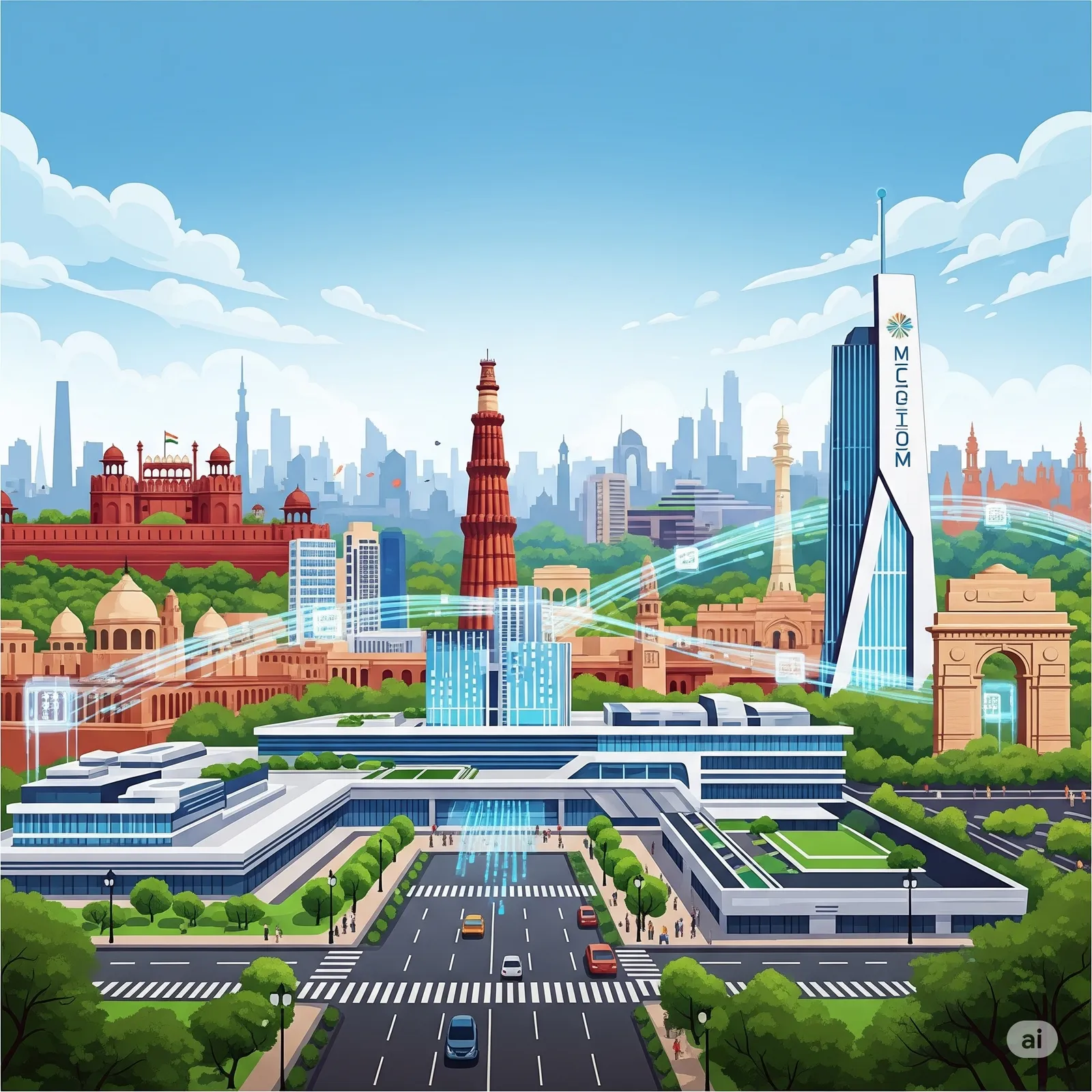
From decoding cosmic mysteries to powering climate models and AI innovations, supercomputers have become essential engines of modern science. In India, this journey has been transformative—combining Science, Technology, Engineering, Arts, and Mathematics (STEAM)—to shape a self-reliant, future-ready digital nation.
🧠 Tracing the Journey: From PARAM 8000 to AIRAWAT
India’s supercomputing journey began in 1991 with the launch of PARAM 8000 by C-DAC, defying technology denial regimes and establishing our independence in high-performance computing.
🕰️ Full Timeline of Key Milestones
| Year | Milestone | Description |
|---|---|---|
| 1991 | PARAM 8000 | First Indian supercomputer; peak 1 GFLOPS. Built indigenously by C-DAC. |
| 1995 | PARAM 9000 | Enhanced performance; widely used in academic and defense sectors. |
| 1998 | PARAM 10000 | Crossed 100 GFLOPS. Step into global computing race. |
| 2002 | PARAM Padma | First Indian system to cross 1 teraflop and enter TOP500 list. |
| 2007 | EKA (Tata) | Ranked 4th fastest globally; showed private sector capabilities. |
| 2015 | Launch of NSM | Vision to build 70+ supercomputers with Indian hardware & software. |
| 2019 | PARAM Shivay | First NSM-era system; deployed at IIT-BHU. |
| 2020–2022 | PARAM Brahma, Sanganak, Pravega | High-performance academic computing clusters across India. |
| 2023 | AIRAWAT | India’s fastest AI supercomputer, at C-DAC Pune, ranked 75th globally. |
| Ongoing | Trinetra Network | A 100–200 Gbps national backbone linking HPC nodes. |
🏗️ The National Supercomputing Mission (NSM): A Transformative Vision
Launched in 2015 by the Ministry of Electronics and IT (MeitY) and the Department of Science and Technology (DST), and implemented by C-DAC and IISc Bengaluru, NSM aims to:
Install 73+ indigenous supercomputers across academia, research, and industry.
Develop Indian processors, software stacks, and interconnects.
Train 20,000+ engineers and researchers in high-performance computing (HPC).
Foster a nationally connected grid for scientific, social, and economic transformation.
🌐 Present Status: Where Are We Today?
Over 33 supercomputers deployed till 2024, including AI-focused systems.
PARAM Pravega and AIRAWAT now power top research in AI, fluid mechanics, quantum computing, climate modeling, and more.
NSM extended to December 2025, ensuring continued investment in self-reliant supercomputing infrastructure.
🔭 Vision for the Future: More Than Just Machines
India’s supercomputing mission is not just about performance benchmarks—it’s about empowering our youth, researchers, and industries to tackle 21st-century grand challenges:
🌎 Climate modeling and disaster risk prediction
🧠 Artificial Intelligence and Generative AI
🧬 Bioinformatics and drug discovery
💧 Fluid dynamics for engineering and urban planning
🚀 Space and satellite data analysis
🏥 Personalized medicine and health diagnostics
This is a STEAM revolution—blending technical innovation with creativity and human impact.
🔊 A Call to Action: For the Next Generation and Private Innovators
While the government has laid a strong foundation, India now needs its young minds, startups, and private industries to take this mission forward. Here’s how:
🔹 Startups in AI, climate-tech, quantum computing, and genomics can use supercomputing as a launchpad.
🔹 Private tech companies should invest in indigenous processor and cooling tech R&D.
🔹 STEAM educators and institutions must introduce students to HPC early through training and open-access clusters.
🌱 Final Thought
India's supercomputing journey is not just a national story—it's a collective aspiration to lead the world in computing for good. Whether you're a student, researcher, policymaker, or entrepreneur, the National Supercomputing Mission invites you to contribute to the next chapter.
💡 Because the future isn’t just coded—it’s computed.