Mobile Usage among Indian teens
In a world where teenagers spend more time on mobile screens than in classrooms, are we still teaching them in a way they learn best?
🌍 The Reality: Teens Live in a Mobile‑First World
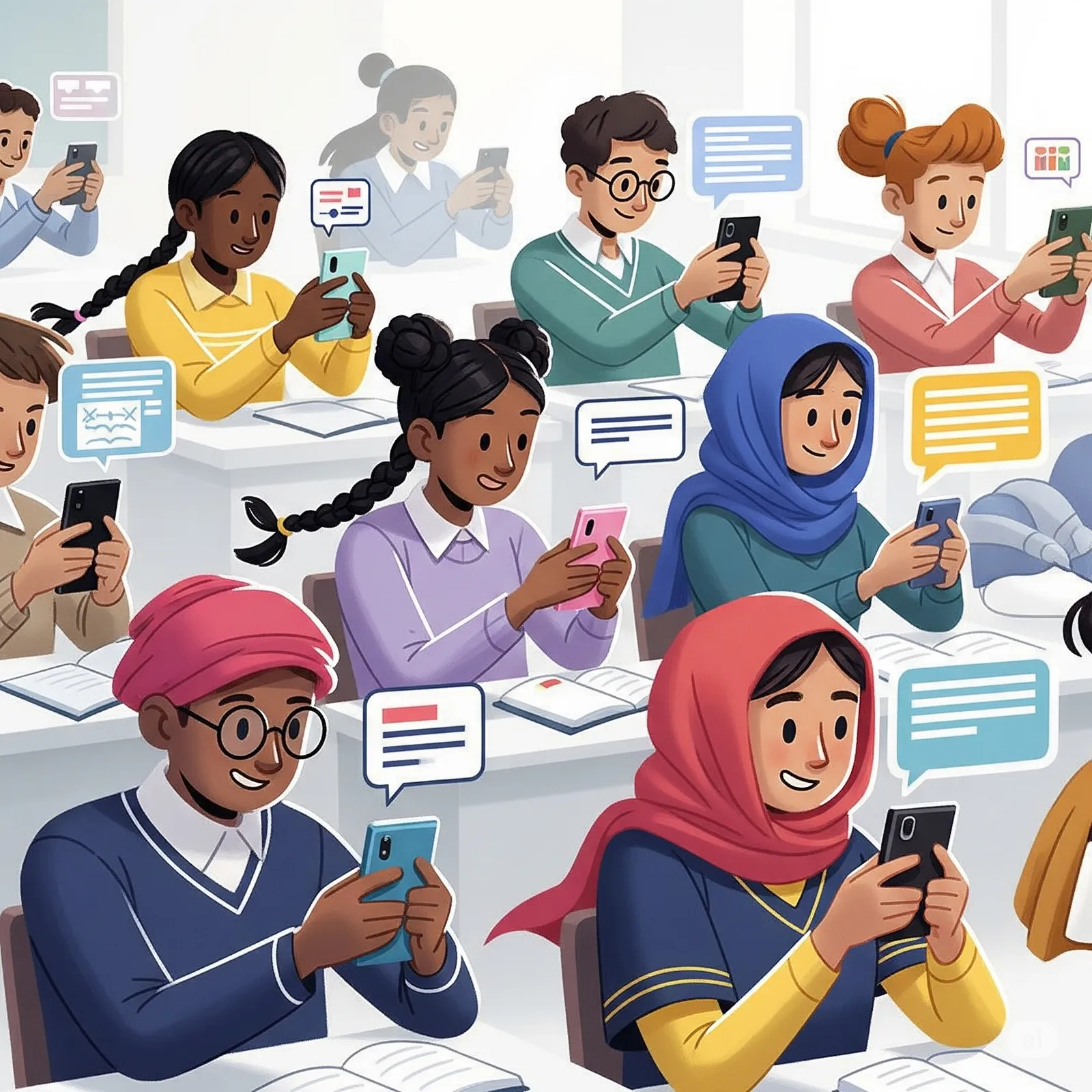
Teenagers today are digital natives—and their entire world revolves around mobile devices.
| Metric | Value |
|---|---|
| Rural teens with smartphone access | ~90% |
| Aged 14–16 knowing how to use smartphones | 82.2% |
| Teens using smartphones for education | 57% |
| Average teen screen time | ≈ 7 hrs 22 mins/day |
| Teens on social media | ~93% |
| Point prevalence of smartphone addiction (India) | 39–44% |
These numbers reveal a clear trend: Indian teens are growing up in a mobile-first environment. In fact:
A 2024 ASER report states that 82.2% of youth aged 14–16 know how to use smartphones.
57% of rural teenagers are already using mobile phones for learning purposes.
Mobile usage is deeply embedded in teen routines, with global average screen time exceeding 7 hours daily, driven largely by mobile content.
In rural India, smartphones are present in over 96% of households.
Despite this mobile immersion, Indian classrooms continue to rely on traditional instruction methods, failing to leverage the full potential of mobile in education.
🎯 Where Teens Are Engaged — and It’s on Mobile
Teenagers aren’t disinterested in learning. They’re disinterested in boring, outdated education models. Their interests are already shaped by mobile content:
Mobile Gaming & Esports: A dominant form of entertainment and learning.
YouTube & Reels: Teens consume and create video content on mobile platforms daily.
DIY & Coding Platforms: Tools like Scratch and TinkerCAD are often accessed through mobile-friendly interfaces.
AI Curiosity: With mobile-first AI apps like ChatGPT and Google Gemini, students are exploring complex topics informally.
These are learning tools in disguise—and a powerful case for mobile-first education.
💡 Why India Needs a STEAM and Mobile Learning Shift
STEAM—Science, Technology, Engineering, Arts, and Mathematics—isn’t just a curriculum. It reflects the way today’s world operates. But Indian education systems are falling behind:
Curricula lag 5–7 years behind modern tech use, including mobile applications.
Creative thinking—essential in the digital age—is often discouraged in rote-based classrooms.
Only a small percentage of schools support hands-on, mobile-accessible experimentation.
As mobile becomes the most accessible educational tool, we must redesign learning to be mobile-responsive, interest-led, and STEAM-powered.
📲 Reimagining Classrooms for the Mobile Generation
To connect with mobile-native teens, education must become dynamic, visual, and personalized—just like the mobile experiences they’re used to:
Gamify learning: Build algebra apps. Turn history into AR tours.
Maker projects: Let kids create mobile apps or gadgets as part of class projects.
Microlearning: Deliver concepts through short, engaging mobile video clips.
Real-world relevance: Use local data—like air quality or mobile usage stats—to teach science.
Mobile-friendly assessments: Allow submissions via videos, digital artwork, or podcasts.
Integrating mobile into classrooms isn’t optional—it’s inevitable. The only question is how fast schools can adapt.
🧠 India’s Unique Opportunity for Mobile-First Education
India has the world’s largest adolescent population—over 253 million aged 10–19. And nearly all of them have access to mobile devices.
Yet fewer than 10% of Indian students experience regular, hands-on, interdisciplinary education that combines creativity and tech. As per NITI Aayog, 50% of future jobs will demand STEAM capabilities—and most of those will be driven by mobile technologies and tools.
🚀 Conclusion: Align Education with Mobile-First Realities
If we want to prepare young minds for the future, we must move away from static textbooks and embrace mobile learning ecosystems. Here’s what that looks like:
📲 Use mobile devices as learning tools, not distractions
🛠 Encourage building and experimentation through maker kits and apps
🎨 Foster creativity using mobile-friendly design tools
🔬 Enable curiosity through hands-on science and discovery
🤖 Train for tech fluency with real-world mobile platforms
When we teach how they live—on mobile—we unlock how they think.
📚 References
“’90% of rural children aged 14‑18 have smartphones’” – Times of India (Jan 2024)
Hindustan Times / ASER 2023 – smartphone penetration & usage skills
ASER 2024 – 82.2% of 14–16 yr-olds know smartphone use; 57% use it for learning
Exploding Topics – teens average 7 hrs 22 mins screen time/day
Times of India Mehsana (ASER Rural) – 63% rural teens use phones for studies; smartphones in 96.6% homes
Research journals – smartphone addiction prevalence 39–44%, linked with depression in teens
UNICEF India – Adolescent Demographics
NITI Aayog & UNDP – Youth Employment & STEAM Outlook India 2030
Brookings India – Indian Curriculum vs Future Readiness
WEF – Future of Jobs Report 2023